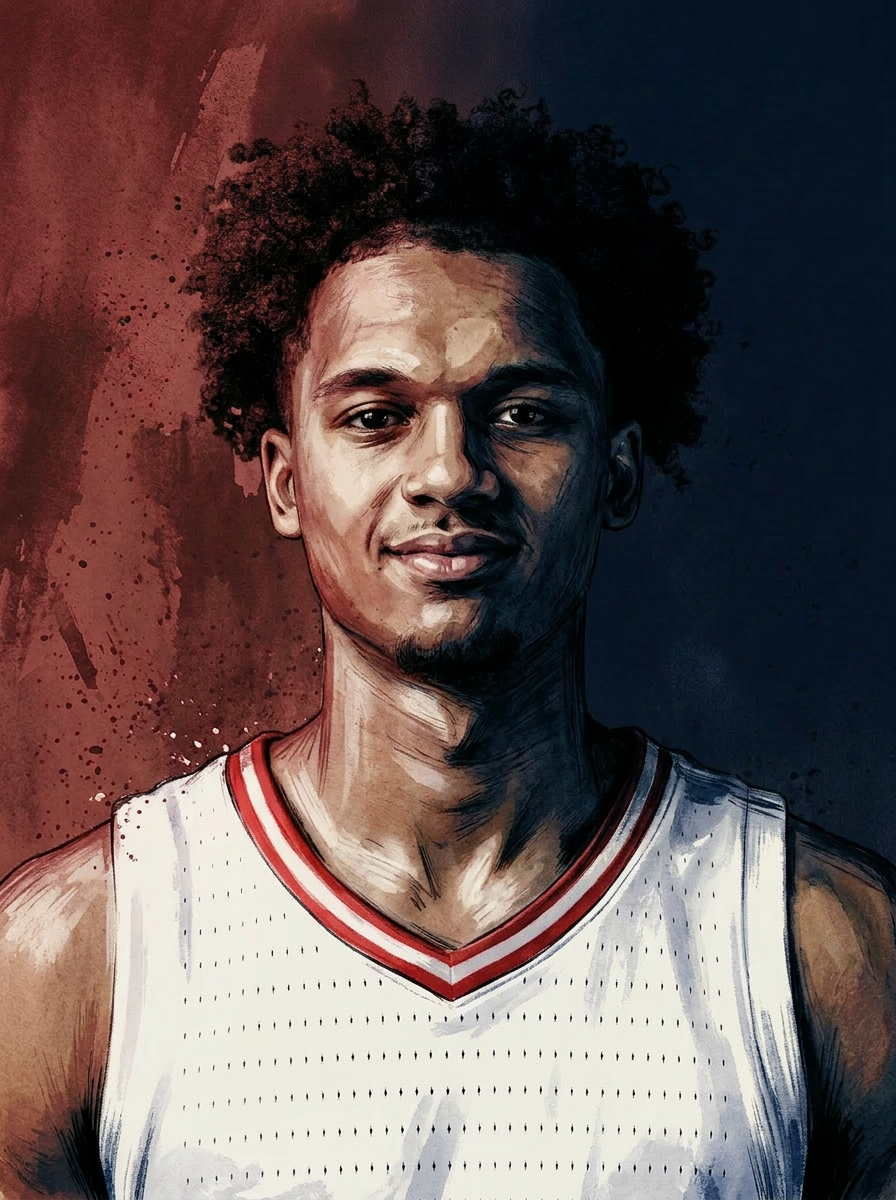

Kingston Flemings
Kingston Flemings is the Houston freshman point guard who's risen faster than anyone else in this class. 6'4" with a 6'7" wingspan, running Kelvin Sampson's offense as a true lead — 17 a game with a 2.9 AST/TO, 38.7% from three, and 1.8 steals as the team's point-of-attack defender. The shot still needs to keep climbing on volume, but everything else is already NBA-tenable. If he's there at #21, he's the cleanest backup-PG fit on the board, with starter-level upside by year three.
Combine intel pending. Measurements, workout reports, and team interviews land here as they break.
Per-36 Stats
Houston · 31.7 MPG · static profile seed
Best NBA comp for Kingston Flemings?
Disagree? Cast your vote. One per browser. 0 votes so far.

- Cade5/5
- Ausar4/5
- Duren5/5
- Grit4/5
True backup point guard with size — long-term insurance behind Cade who actually defends.
Flemings at the back of the lottery is the cleanest backup-PG fit on the board for Detroit. The size doesn't overlap Cade, the POA defense covers the spot Daniss Jenkins can't, and the engine-PG outcome means he can run the bench unit by himself by year two. Floor is a 12-year starting-caliber backup PG; swing is whether the shot scales to closer-of-games volume.
The Report
Flemings is the fastest-rising guard in the class and a fundamentally different archetype from Acuff. He's a 6'4" lead initiator with a reported 6'7" wingspan, running Kelvin Sampson's offense at Houston — which is to say he's been trusted to run set plays, defend at the point of attack, and rebound at a high rate as a freshman. The production reflects that role: 17 PPG, 5.5 APG to 1.9 TOV, 1.8 SPG, and a 38.7% from three on real volume.
The carrying skill is the passing and the pace. He sees the second and third reads in pick-and-roll, manipulates tag defenders before they help, and hits short-roll deliveries on time. Floor and Ceiling explicitly comps the engine-PG outcome to Tyrese Maxey / less-physical John Wall, and the AST/TO (2.9) holds up against high-major defense. He's downhill first — drives in straight lines, finishes through contact, and gets to the line — but the pull-up is real enough that defenses can't drop on him every possession.
The shot is the swing skill in the most literal sense. 38.7% on lower-volume three-point attempts is genuinely encouraging for a freshman lead guard, but the volume needs to scale before scouts treat it as a finished skill. The mid-range pull-up is the on-ramp; the catch-and-shoot version off Cade screens is the version Detroit would lean on.
Defensively he's the most NBA-tenable guard in this tier. 1.8 SPG with real POA discipline, plays bigger than 6'4" thanks to the wingspan, and Houston's scheme has him switching 1–2 every possession. The 0.4 BPG is a guard outlier on the high side. He'll get hunted by elite primary creators eventually, but the floor is closer to neutral than negative.
For Detroit at the back of the lottery, Flemings is the cleanest fit on the board. The size doesn't overlap Cade, the POA defense covers the spot that Daniss Jenkins can't, and the engine-PG outcome means he can run the bench unit by himself by year two. Floor outcome is a 12-year starting-caliber backup PG; swing is whether the shot scales to closer-of-games volume.
- ▸True engine-PG processing — sees the second and third reads in PnR, manipulates tag defenders on time
- ▸POA defense is real — 1.8 SPG with discipline, plays bigger than 6'4" thanks to the 6'7" wingspan
- ▸AST/TO (2.9) on high-major volume — won't force the play, runs Sampson's offense as a freshman
- ▸Downhill burst with size — drives in straight lines, finishes through contact, gets to the line
- ▸38.7% from three on real college volume — encouraging mechanics and leading indicator
- ▸Plus rebounding for a guard (4.6 RPG/36) — triggers transition possessions
- ▸Pull-up three volume needs to scale before it's a finished NBA skill
- ▸Not a microwave shot-maker — Acuff-style late-clock bailouts aren't in the menu yet
- ▸Strength still developing; gets bumped by NBA-level guards in the paint
- ▸Mid-range pull-up is the on-ramp shot, not a finished move
- ▸Will get hunted by elite primary creators in switch coverages
Flemings at the back of the lottery is the cleanest backup-PG fit on the board for Detroit.
If pull-up three volume needs to scale before it's a finished never resolves, pull-up three volume needs to scale before it's a finished nba skill
He answers the open questions below — film, role, and reps between now and June.
Three Questions
Does the 38.7% from three scale with NBA volume, or does the lower-volume number hide a real comfort cap?· debate →
Can he be a closer-of-games shot-maker, or does the ceiling stay engine-PG / connector with defense?· debate →
Is the realistic comp Tyrese Maxey, less-physical John Wall, or a polished Tyler Kolek?· debate →
See the room argue it out
Open the Draft Room debateWhere Scouts Disagree
Flemings split is downhill burst vs. shooting. Some boards trust the speed; others won't bite until the jumper shows up.
Elite first step, rim pressure, and improving feel = a Tyrese Maxey starter kit.
Sub-30% from three on real volume. Without the pull-up, defenses sag and the burst gets neutralized.
The engine-PG processing is what separates him from the rest of the lead-guard tier. He sees the second and third reads in PnR, hits short-roll deliveries on time, and manipulates the tag defender before help arrives. Floor and Ceiling's Tyrese Maxey / less-physical John Wall comp range only lands because the feel is this finished at 19
- Downhill burst with size is the carrying scoring skill — straight-line drives, two-foot finishes through contact, and a real FT rate. He's not a microwave pull-up shooter, but he doesn't need to be in his projected role. The half-court answer is rim pressure first, kickouts second.
- POA defense is genuinely NBA-tenable right now. 1.8 SPG with real positional discipline, plays bigger than 6'4" thanks to the 6'7" wingspan, and Houston's scheme has him switching 1–2 every possession. That's the differentiator vs. every other guard in this range.
- Shot mechanics are clean and the 38.7% from three is a leading indicator, but the volume is the swing — pull-up reps need to scale before defenses respect the late-clock version. Until then he's a closeout-attacker first who'll punish help defenders that sag.
- The fit + tools combination is the cleanest backup-PG outcome in the class for a team that already has Cade. Size doesn't overlap, defense covers the gap Jenkins can't, and the engine-PG ceiling means he could anchor a bench unit by year two. Floor is a 12-year backup starter; ceiling is a 25/6 closer who also defends.
Consensus
Each outlet's evaluation of the player's pure value, ignoring team fit. Bars scale inversely to rank.
Got intel or a question on Kingston Flemings?
Drop a tip, a film note, or a scouting question — we'll work the best ones into the next Intel Report.
Get the Pistons Draft Intel Report
Want our deeper film notes on Kingston Flemings and the rest of the #21 board? Get the first Pistons Draft Intel Report the moment it ships.
Keep digging on Kingston Flemings
Detroit-first ranking with Fit Scores.
Curated head-to-head with verdict and Detroit angle.