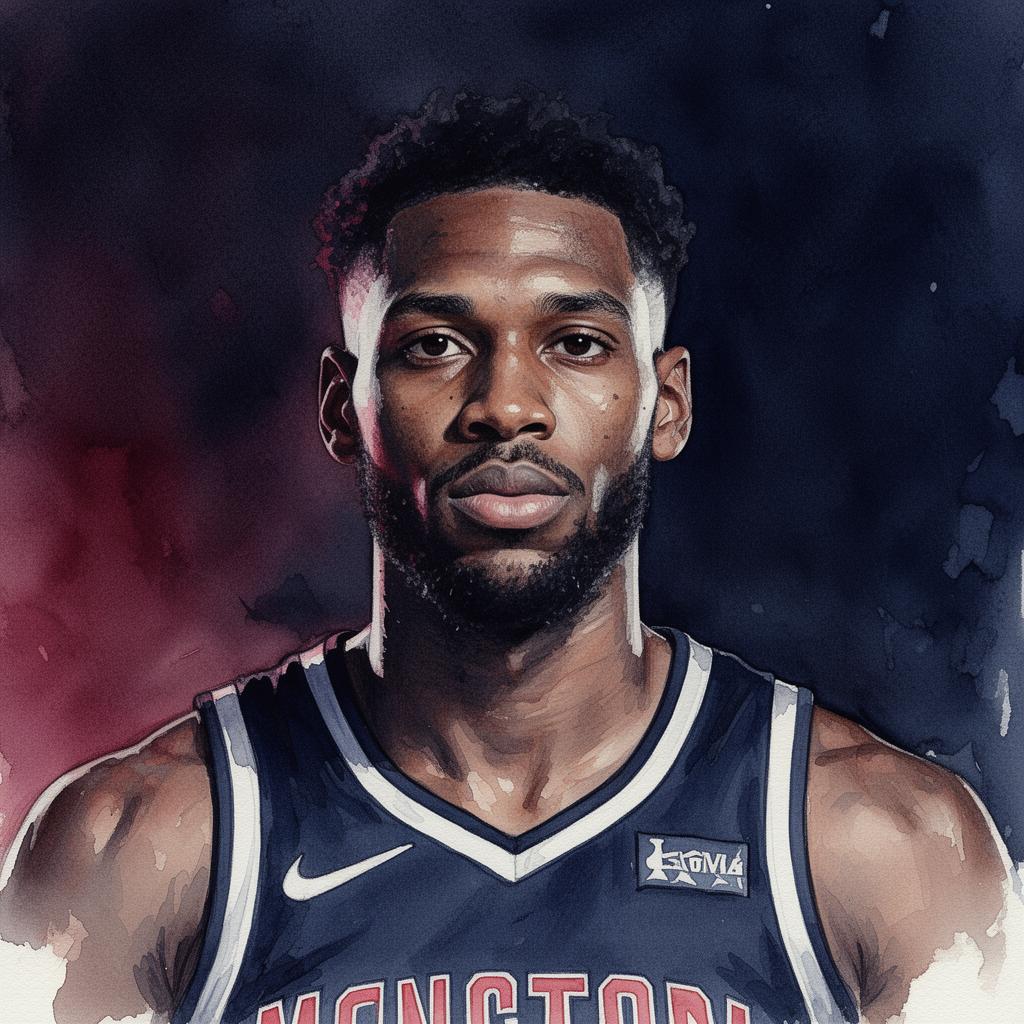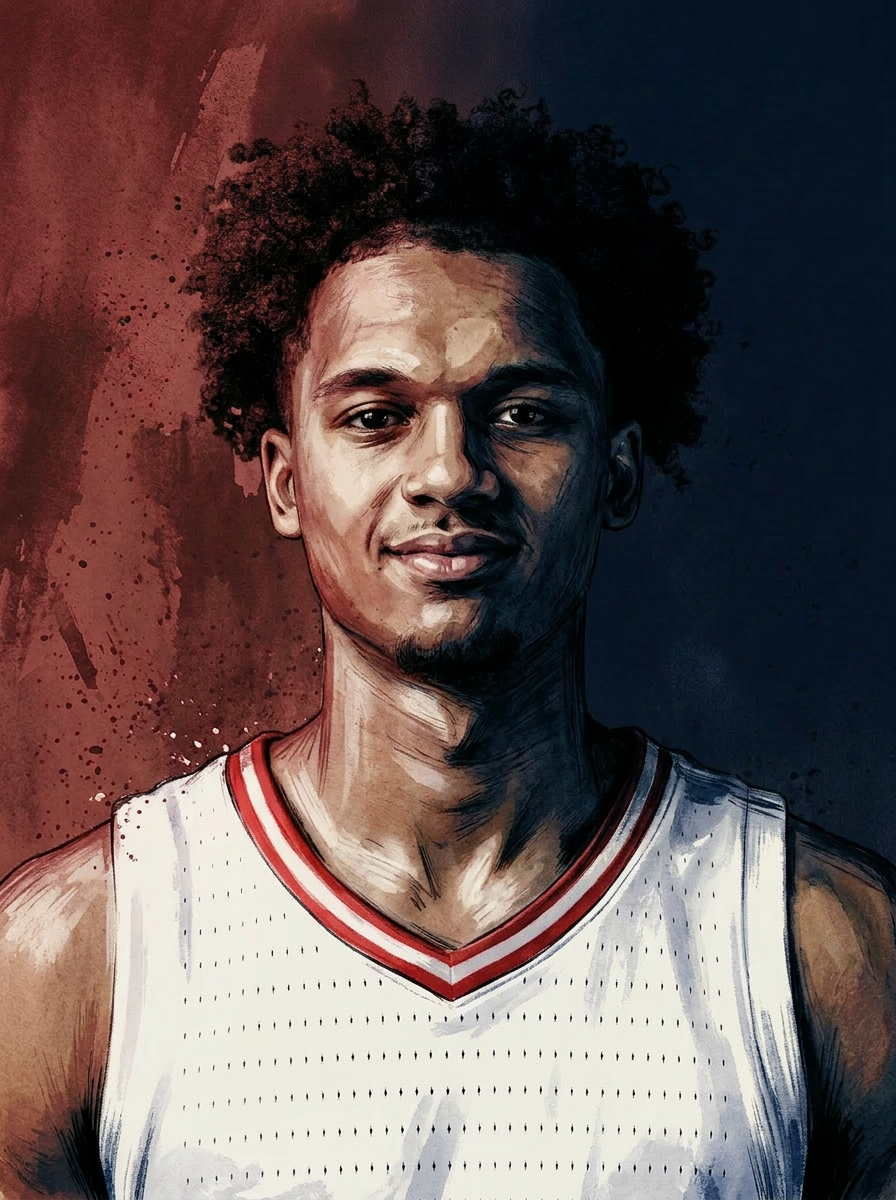
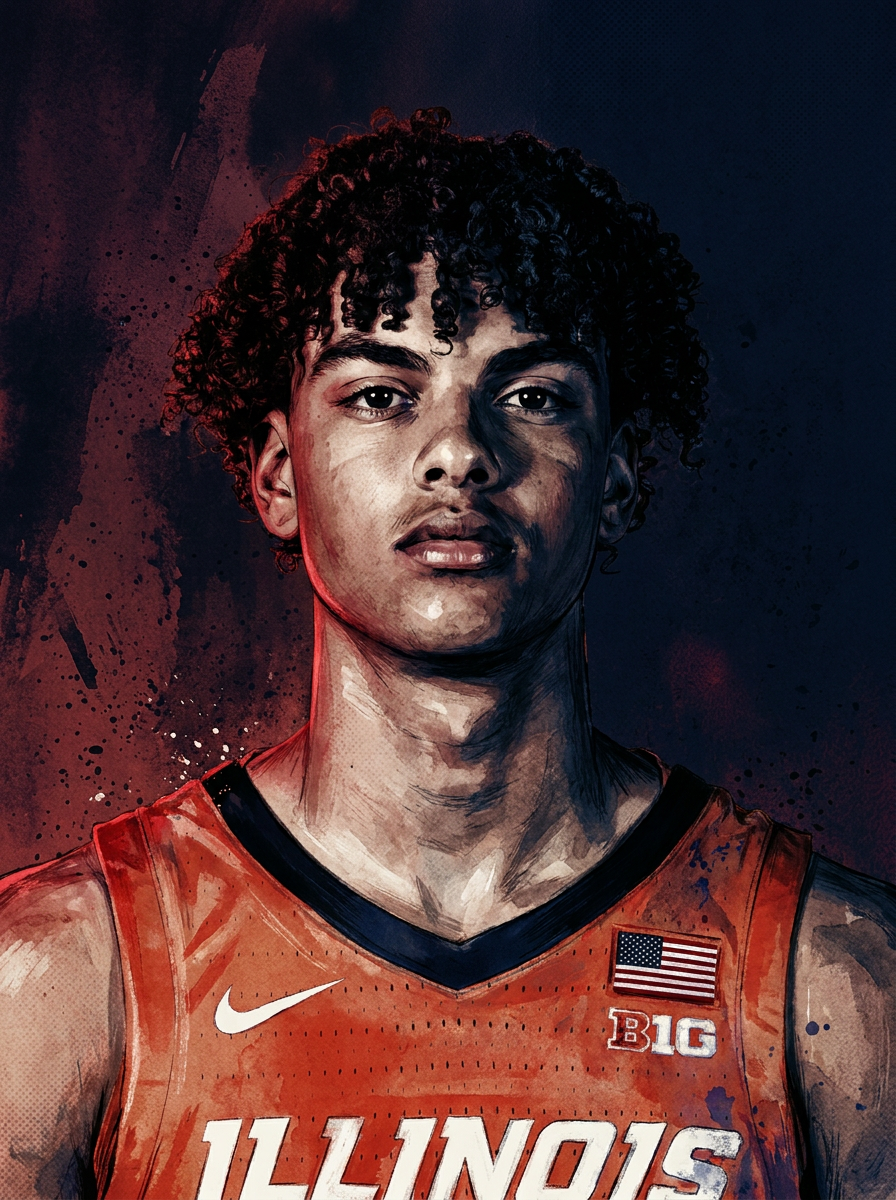
Keaton Wagler
Keaton Wagler is the Illinois freshman guard who turned a high-school breakout into a real lottery résumé. 6'5" with a 7'0" wingspan and one of the cleanest pull-up threes in the class — 38% off the dribble on real volume, plus the kind of pick-and-roll feel scouts usually wait two years to grade out. The flags are physical: he doesn't dunk, the rim finishing is below average, and he overlaps Cade's job description. Fun bet for someone — not the cleanest fit at #21.
Combine intel pending. Measurements, workout reports, and team interviews land here as they break.
Per-36 Stats
Illinois · 37 GP · 33.9 MPG · static profile seed
Best NBA comp for Keaton Wagler?
Disagree? Cast your vote. One per browser. 0 votes so far.

- Cade5/5
- Ausar5/5
- Duren5/5
- Grit4/5
Shot-making secondary creator next to Cade — pull-up 3 volume we don't have, but overlaps his job.
Wagler at #21 is an offense-first bet. The pull-up three volume is something Detroit's perimeter group genuinely lacks, and the 41% catch-and-shoot makes the off-ball version next to Cade tenable. But the archetype overlaps Cade's job description rather than filling the 3&D wing or shooting-big needs that actually balance the roster. The realistic outcome is a Podziemski-tier secondary creator who spaces the floor and runs the bench unit — useful, not transformative.
The Report
Wagler is the breakout name in the high-school class turned freshman starter at Illinois — a 6'5" combo guard with a reported 7'0" wingspan, NBA range on the pull-up, and a high-feel decision-making profile that's atypical for his age. He's averaging 17.9 / 5.1 / 4.2 on 44/40/80 splits with a 2.3 AST/TO, and the way he generates that scoring is what scouts have latched onto: 60% of his jumpers come off-the-dribble, 87% of his rim makes are unassisted, and 55% of his made threes are unassisted. He's creating his own offense at volume.
The pull-up three is the carrying skill — 38% off the dribble on 147 attempts with a high release and step-back as the go-to move. The 41% catch-and-shoot keeps the off-ball version live, which matters for Detroit because it means he doesn't need the ball to function. Illinois runs him as the primary P&R handler on 63% of his possessions at 1.08 PPP — he reads coverages, hits the roll man, and kicks out cleanly without forcing.
The finishing is the offensive red flag and it's a real one. He shot 51–55% at the rim on the season with zero dunks on one attempt all year. The handle is craft-and-hesitation, not burst — he never speeds up, which is fine in college but is the swing skill against NBA length. Add a thin frame (up from 168 to 182 lb but still gets bumped on contact), and the path to NBA finishing efficiency runs through functional strength.
Defensively the tools are there on paper — 6'5" with a 7'0" wingspan — but the production lags badly. STL% 1.7 / BLK% 1.3 despite the length, often too upright at the point of attack, dies on screens. Off-ball rotations are the better part of his D right now. He'll get hunted on switches until he adds NBA-functional strength.
For Detroit at #21 the framing is specific: he overlaps Cade's job description, doesn't fix the 3&D wing or shooting-big need, and the off-ball viability is the only reason it's not a hard pass. Drafting him is an offense-first bet on a secondary-creator outcome — the Podziemski role-comp tier — not a roster-balancer.
- ▸Pull-up three is a finished NBA move — 38% off the dribble on 147 attempts, high release, step-back as the go-to
- ▸Catch-and-shoot keeps the off-ball version live — 41% C&S, 43% on 88 spot-up 3PA
- ▸Primary P&R operator on 63% of possessions at 1.08 PPP — reads coverages, hits the roll, kicks out clean
- ▸Self-creation profile is loud — 87% of rim makes unassisted, 55% of made threes unassisted, 60% of jumpers off-the-dribble
- ▸High-feel decision-maker — 2.3 AST/TO, low TO rate, won't force the play
- ▸Frame trajectory: +14 lb and +3" vertical over the summer — strength is trending the right way
- ▸7'0" wingspan and 6'5" frame give the defensive tools room to develop with strength
- ▸Finishing at the rim is the red flag — 51–55% at the rim, 0-for-1 dunks all year
- ▸Below-the-rim athlete — handle is craft-and-hesitation, not burst; never speeds up
- ▸Thin frame gets bumped at the point of attack and dies on screens
- ▸STL%/BLK% (1.7/1.3) lag badly behind the length — defensive events are rare
- ▸Often too upright at POA; will get hunted on switches until he adds NBA-functional strength
- ▸Free-throw rate is fine (.48) but he doesn't generate the volume of contact you'd want from a 6'5" lead guard
Wagler at #21 is an offense-first bet.
If finishing at the rim is the red flag never resolves, finishing at the rim is the red flag — 51–55% at the rim, 0-for-1 dunks all year
He answers the open questions below — film, role, and reps between now and June.
Three Questions
Does the functional strength arrive? Frame trajectory says yes — but the path from low-50s at the rim to NBA-tenable finishing runs through it.· debate →
Can the catch-and-shoot 41% hold at NBA range? That's the off-ball escape hatch that makes him work next to Cade.· debate →
Is the POA defense salvageable to neutral, or does he stay a hunt target his whole career?· debate →
See the room argue it out
Open the Draft Room debateWhere Scouts Disagree
Wagler is the polarizing one. Some boards see a top-5 shot-maker; others have him outside the lottery because the tools and defense don't track.
Pull-up shooting, mid-range gravity, and feel for the game are too rare to fade. Best shooter in the class.
Average burst, thin frame, and lukewarm defense cap the upside as a sixth-man scorer.
Pull-up three is the carrying skill and it's a finished move — 38% off-the-dribble on 147 attempts, high release with a step-back as the go-to. 60% of his jumpers come off-the-dribble, which is rare volume at this age and lines up with the secondary-creator role you'd ask him to play next to Cade
- Self-creation profile is unusually loud for a high-feel guard: 87% of rim makes unassisted, 55% of made threes unassisted, AST/TO 2.3 with a low TO rate. He reads P&R coverages without forcing the play — Illinois runs him as the primary handler on 63% of possessions at 1.08 PPP.
- Off-ball shooting keeps the fit alive — 41% catch-and-shoot, 43% on 88 spot-up threes. That's the escape hatch that lets the archetype work next to a ball-dominant point guard instead of competing with him.
- Finishing at the rim is the offensive red flag and it's a real one — 51–55% on the season with zero dunks on one attempt all year. He's a below-the-rim athlete who plays craft-and-hesitation, never burst, and the thin frame (up to 182 from 168 but still slight) gets bumped through contact.
- Defense is theoretical right now. 6'5" with a 7'0" wingspan but STL%/BLK% only 1.7/1.3, dies on screens, plays too upright at the point of attack. Off-ball rotations are his better tape. He'll get hunted on switches until functional strength catches up — Brandin Podziemski is the cleanest role comp, with Haliburton/SGA explicitly flagged as ceiling reaches he hasn't earned yet.
Consensus
Each outlet's evaluation of the player's pure value, ignoring team fit. Bars scale inversely to rank.
Got intel or a question on Keaton Wagler?
Drop a tip, a film note, or a scouting question — we'll work the best ones into the next Intel Report.
Get the Pistons Draft Intel Report
Want our deeper film notes on Keaton Wagler and the rest of the #21 board? Get the first Pistons Draft Intel Report the moment it ships.
Keep digging on Keaton Wagler
Detroit-first ranking with Fit Scores.