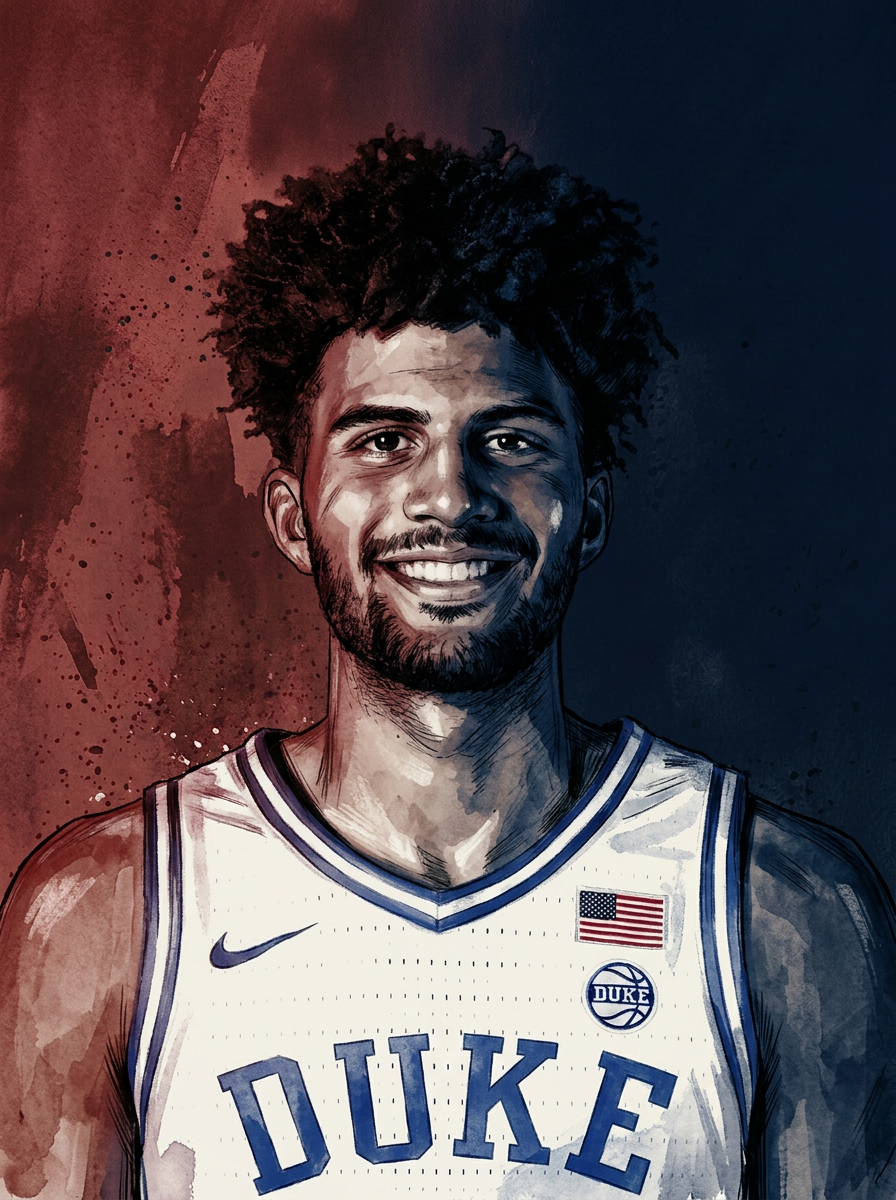
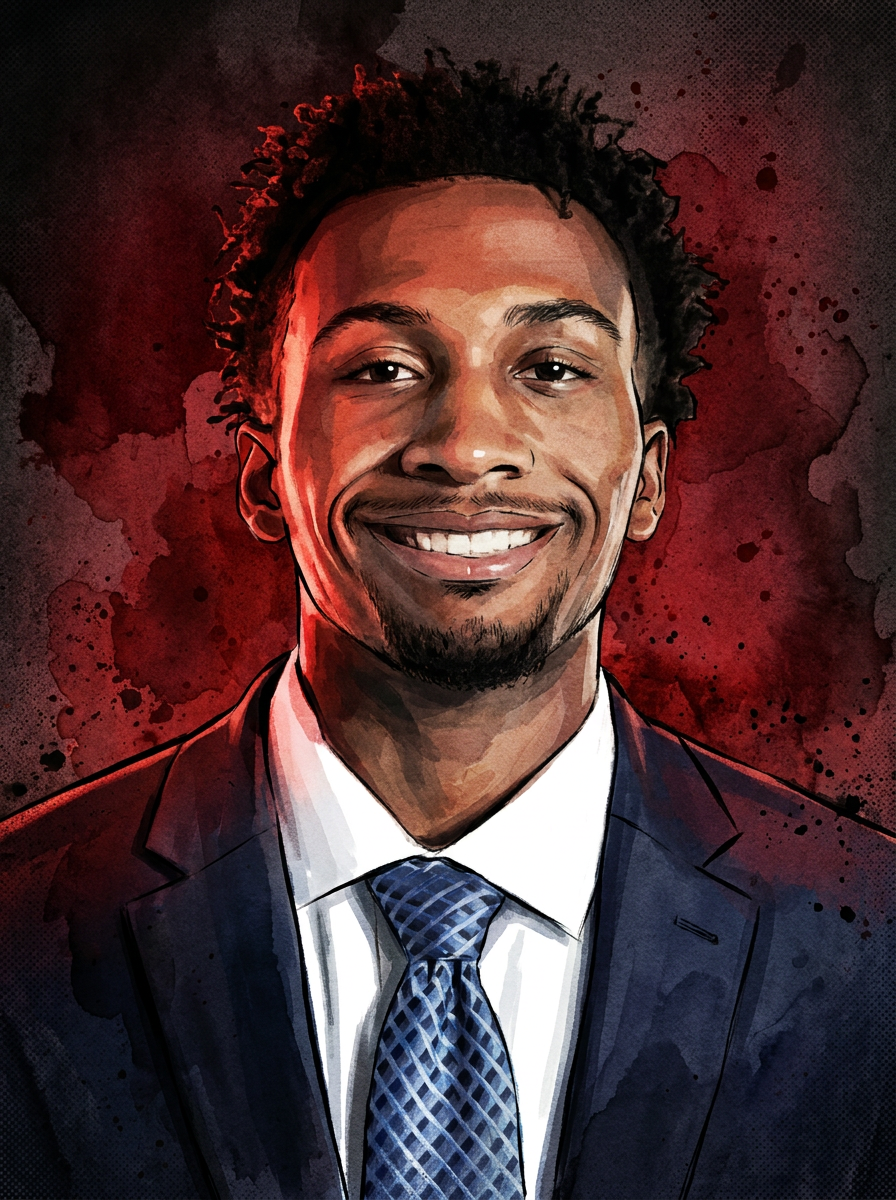
Darryn Peterson
Darryn Peterson is the Kansas combo guard most boards have second behind Dybantsa. He's the best pure shot-maker in the class — pull-up threes, step-backs, and mid-post pivots that look closer to a young Kobe than a typical freshman — and at 6'4.5" with a 6'9.75" wingspan he has real shooting-guard size. The two flags are conditioning (he missed games at Kansas with cramping) and a defense that drifts when he's tired. We'd love the fit next to Cade. We're not getting near him at #21.
Combine intel pending. Measurements, workout reports, and team interviews land here as they break.
Per-36 Stats
Kansas · 29 MPG · static profile seed
Best NBA comp for Darryn Peterson?
Disagree? Cast your vote. One per browser. 0 votes so far.

- Cade4/5
- Ausar4/5
- Duren5/5
- Grit4/5
Starting SG next to Cade. Jenkins and Duncan run the bench shot-creation and spacing.
Peterson would slot in immediately as the starting shooting guard next to Cade Cunningham, with Daniss Jenkins and Duncan Robinson sliding to the second unit. Jenkins has been a genuine find as a backup ball-handler, but he profiles closer to a steady connector than a microwave bucket-getter, and Duncan is a movement shooter rather than a creator. Peterson gives the starting unit a true secondary shot-creator: someone who can run pick-and-roll next to Cade in two-guard looks, generate his own shot against set defenses, and close games when the half-court bogs down.
The Report
Peterson is the best self-creating guard in the class and the most polished shot-maker not named Dybantsa. At 6'4.5" with a 6'9.75" wingspan he has real positional size, and at Kansas he's been running pick-and-roll, getting to his pull-up, and finishing on two feet through contact at a rate that scouts have flagged as elite for his age. The footwork in the mid-post is the giveaway — the step-throughs and pivots look closer to a young Kobe than a typical freshman wing.
The shot diet is genuinely three-level. He's comfortable above the break (38% on volume), in the mid-range pull-up off ball screens, and at the rim on two-foot drives. The 4.8 assists per-36 understate the playmaking flashes — when defenses load up he'll spray short-roll reads — but his AST/TO sits closer to a combo guard than a lead, and shot selection drifts iso when the offense stalls.
The two real flags are conditioning and defense. He missed multiple games at Kansas with cramping, and on-ball he's average at best — closeout discipline is inconsistent and he can drift on weak-side rotations. Neither is a profile-killer, but both keep him a notch behind Dybantsa.
For Detroit, the framing is specific: Peterson would start at shooting guard next to Cade Cunningham on day one, with Daniss Jenkins and Duncan Robinson handling the bench. Jenkins is a real connector, but he's not an elite shot-maker; Duncan is a movement shooter, not a creator. Peterson is the rare guard who solves both — secondary creation when Cade rests, and a closing-time shot-maker Detroit hasn't had in years outside of Cade.
- ▸Elite self-creation off the dribble — separation game vs. set defenses
- ▸Mid-range mastery: pull-up, fade, and short-roll floater all NBA-projectable
- ▸Real positional size at 6'4.5" with a 6'9.75" wingspan
- ▸Three-level shot diet — comfortable above the break, mid-post, and at the rim
- ▸Two-foot finisher with body control through contact
- ▸Plus event creator on defense when locked in (1.3 SPG at Kansas)
- ▸Cramping/conditioning concerns flagged at Kansas (multi-game miss)
- ▸Average-at-best on-ball defender — closeout discipline is inconsistent
- ▸Shot selection drifts iso when offense stalls (NBADraftRoom: 'hero-ball drift')
- ▸Playmaking is secondary — AST/TO closer to combo guard than lead PG
- ▸Off-ball gravity still developing — not yet a movement shooter
Peterson would slot in immediately as the starting shooting guard next to Cade Cunningham, with Daniss Jenkins and Duncan Robinson sliding to the second unit.
If conditioning flags and combo-guard playmaking limits never resolves, cramping/conditioning concerns flagged at kansas (multi-game miss)
He answers the open questions below — film, role, and reps between now and June.
Three Questions
Did the cramping and conditioning issues from Kansas get answered in pre-draft workouts, or do they show up in 82-game NBA seasons?· debate →
Can he hold up defensively as a starting NBA two-guard, or does he need a wing-stopper hiding him every night?· debate →
Does the playmaking grow enough to be a real secondary creator next to Cade, or is he a pure shot-maker who needs the ball in his hands?· debate →
See the room argue it out
Open the Draft Room debateWhere Scouts Disagree
The shot-creation tape is undeniable, but evaluators split on whether the offense will translate to a true #1 NBA scorer or a high-volume secondary guard.
Three-level shot diet, mid-range comfort, and live-dribble pull-up are already NBA-ready. Trust the bucket-getter.
Tough-shot diet and average playmaking cap him as a Bradley Beal-tier scorer, not a true offensive engine.
The Kansas season looked nothing like the projected role — 66% of his FGs were jumpers and just 20% at the rim, after Prolific Prep tape ran closer to a 50/30 split. Parker reads it as injury-shaped (hamstring, quad, ankle, full-body cramps), not a profile change, and the high-school side-by-sides back that up
- The shooting flipped from a swing skill into the calling card: 38% from three on nearly seven attempts a game, 40% on all jumpers, 45% on catch-and-shoot, and a mind-numbing 53% on spot-up threes. Off-screen (38%) and hand-off (47%) numbers say the off-ball role isn't a fallback — he genuinely thrives there.
- Mid-range creation held up even with the athletic dip — manipulative shoulder use, body angling, and lean-back balance to get clean looks without needing burst. The dribble-jumper at 36% is the floor of that skill, not the ceiling.
- Defensively the box score is better than the reputation — 1.4 SPG, 0.6 BPG, 2.9 STL% / 2.3 BLK%, +4.8 DBPM, and opponents shooting 39% in his area. Mostly off-ball reps (he rarely drew the other team's best perimeter scorer), but the hands, length, and instincts project as a real plus defender once the athleticism returns.
- The pick-and-roll handler number (17%) and the iso/transition splits (33% each) are the soft spots, and all three are athleticism-gated. If the burst comes back to Prolific Prep levels, the on-ball creation comes with it; if it doesn't, he still profiles as one of the best off-ball shot-makers in the class with real defensive upside.
Consensus
Each outlet's evaluation of the player's pure value, ignoring team fit. Bars scale inversely to rank.
Got intel or a question on Darryn Peterson?
Drop a tip, a film note, or a scouting question — we'll work the best ones into the next Intel Report.
Get the Pistons Draft Intel Report
Want our deeper film notes on Darryn Peterson and the rest of the #21 board? Get the first Pistons Draft Intel Report the moment it ships.
Keep digging on Darryn Peterson
Detroit-first ranking with Fit Scores.
Curated head-to-head with verdict and Detroit angle.